Blog
11 Most Common Hotel Flooring Mistakes To Avoid in 2026

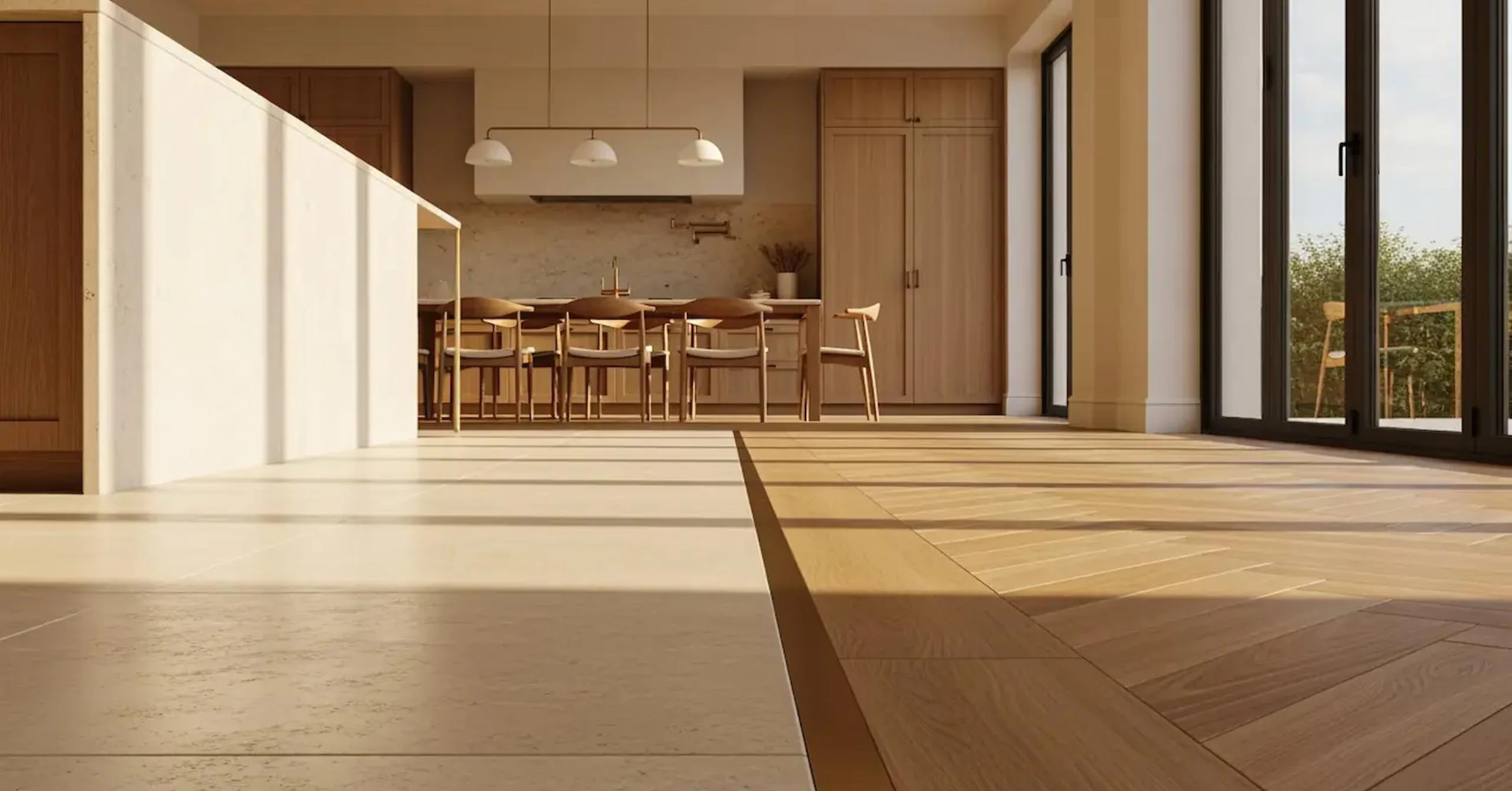
Flooring in a hotel does far more than complete the interior look. It shapes guest safety, determines day‑to‑day maintenance routines, affects operating costs; even influences how guests feel about their stay. When the wrong material is installed, it tends to wear out quickly, trigger frequent repairs, and silently erode guest satisfaction. This guide walks through the most common hotel flooring mistakes hotels still make and how to avoid them in 2026. It also highlights practical options from United Hotel Supply including SPC, luxury vinyl, laminate, engineered hardwood, real wood SPC, and bamboo supported by research and guidance from U.S. government organizations.
Mistake #1: Using Residential Flooring in Busy Hotel Areas
A frequent misstep is installing residential-grade flooring in spaces that behave like transit hubs. Guest rooms, corridors, and lobbies endure constant rolling luggage, staff carts, and round‑the‑clock foot traffic, which quickly push light‑duty products past their limits.
The U.S. Energy Information Administration notes that commercial buildings such as hotels operate at much higher occupancy and usage levels than homes, so materials must be specified accordingly.
Better choices for high‑traffic zones
- SPC flooring engineered for commercial wear layers
- Luxury vinyl lines that are rated for commercial use and heavy foot traffic
Mistake #2: Ignoring Moisture and Slip Resistance
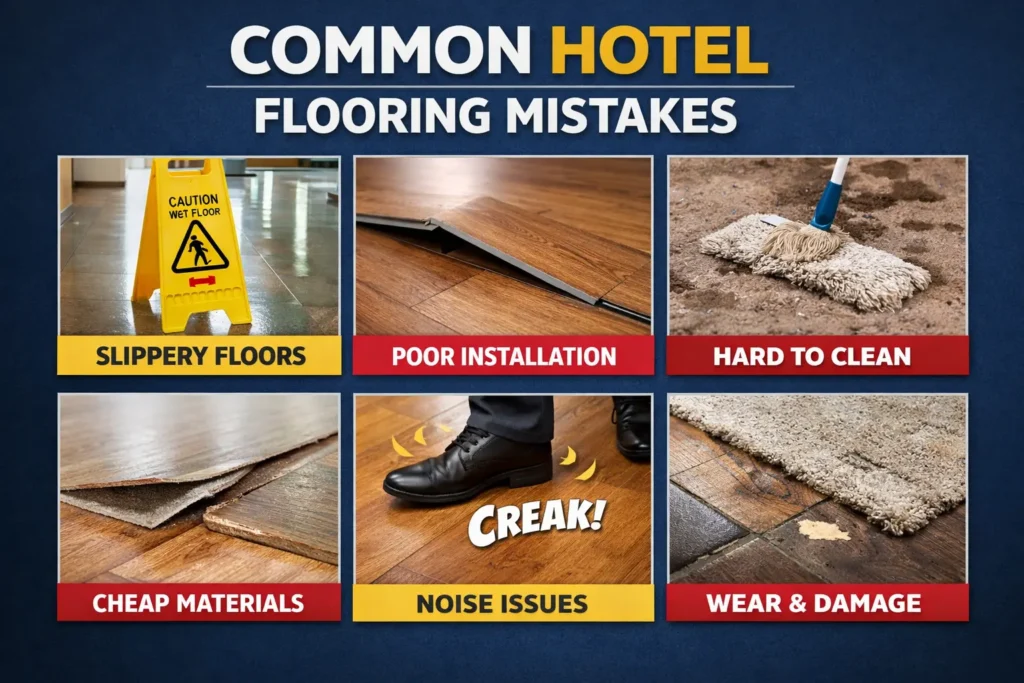
Hotels constantly battle moisture think lobby entrances on a rainy day, pool or spa areas, and guest bathrooms where water often ends up on the floor. Materials that swell, warp, or become slick when wet create both maintenance headaches and safety risks.
The National Floor Safety Institute reports that slips and falls account for millions of emergency‑room visits each year in the U.S., and flooring with poor slip resistance contributes to that risk.
Safer, moisture‑ready options
- SPC flooring with fully waterproof construction
- Real wood SPC products that combine natural looks with water resistance
- Luxury vinyl with easy‑clean surfaces and slip‑resistant textures
Mistake #3: Choosing Looks and Forgetting Durability
Design teams naturally focus on how a floor will look in photos or model rooms. The problem arises when a beautiful but delicate finish is placed where suitcases, cleaning equipment, or direct sunlight quickly scratch or fade it. Within a year or two, what once looked premium can appear tired and patchy.
Attractive and hard‑wearing materials-
- Engineered hardwood that offers the warmth of wood with added dimensional stability
- Laminate flooring built with scratch‑resistant top layers
- Bamboo flooring that delivers both strength and an eco‑conscious story for guests
Mistake #4: Using One Flooring Type Everywhere
No single material is ideal for every corner of a property. Front desks, guest corridors, back‑of‑house areas, and suites all experience different levels of traffic, cleaning frequency, and moisture. Applying a “one product for the whole hotel” rule usually leads to premature failures in the toughest zones and unnecessary over‑spending in light‑use areas.
Smarter Zoning-
- SPC or commercial luxury vinyl in corridors, lobbies, public spaces
- Engineered hardwood or bamboo in guest rooms and suites for a warmer feel
- Laminate flooring in meeting rooms, offices, or secondary spaces
Mistake #5: Looking Only at Initial Price
Budget pressure often pushes decision‑makers toward the lowest‑cost option per square foot. Yet cheap flooring that needs constant repair, intensive cleaning, or early replacement; can end up costing far more over its life cycle. The US General Services Administration highlights that long‑lasting, low‑maintenance materials typically reduce total cost of ownership over time.
Low‑maintenance, cost‑savvy options
- SPC flooring with high‑performance wear layers that stand up to years of use
- Luxury vinyl that cleans easily with standard equipment and products
Mistake #6: Ignoring Sustainability and Guest Expectations
Sustainability has moved from a marketing “nice‑to‑have” to a core expectation for many travelers. Guests increasingly look for signals that a hotel uses environmentally responsible materials and maintains healthy indoor air quality.
The US Environmental Protection Agency encourages the selection of building products; that support better indoor environments and reduce overall environmental impact.
Flooring with a greener story
- Bamboo flooring, harvested from rapidly renewable resources
- Engineered hardwood, which uses less solid timber while still delivering a wood surface
Mistake #7: Forgetting About Noise
Hard, reflective flooring can turn footsteps, rolling suitcases, service carts into a constant background noise; especially in corridors and rooms near elevators. Poor acoustic control quickly turns into guest complaints about sleep quality and overall comfort.
Ways to improve acoustics
- SPC or luxury vinyl systems paired with acoustic underlayment to soften impact sound
- Engineered hardwood installed over sound‑dampening underlayment in guest areas
Mistake #8: Skipping Proper Subfloor Preparation
Even the best‑specified product will underperform if it is laid over an uneven, cracked, or damp subfloor. Trapped moisture can cause adhesive failure or mold; while high or low spots telegraph through rigid surfaces and lead to premature wear or breakage.
Preparation steps that protect your investment-
- Test subfloors for moisture, flatness, and structural soundness before installation
- Use the underlayment, leveling compounds, and moisture barriers recommended for the chosen flooring system.
Mistake #9: Misjudging Color and Lighting
Flooring interacts strongly with lighting and room size. Very dark tones in narrow corridors can make spaces feel tight and gloomy, while ultra‑gloss finishes in bright lobbies can create glare and show every footprint.
Practical design considerations
- Choose lighter SPC or luxury vinyl tones to visually open up compact corridors
- Opt for matte or low‑sheen finishes in strongly lit areas to reduce glare and maintenance
Mistake #10: Creating a Fragmented Brand Experience
When flooring changes abruptly in color, pattern, or quality from one area to the next, the property can feel disjointed. Because guests see and feel the floor with every step, it plays a quiet but powerful role in reinforcing the hotel’s brand.
Keeping the look consistent
- Use a coordinated palette across materials similar tones with different constructions for different use cases
- Align flooring choices with the hotel’s overall design story, whether that is contemporary, classic, or nature‑inspired
Mistake #11: Treating Installation as an Afterthought
Flooring selection often receives plenty of attention, but the installer choice is made late and on price alone. Inconsistent seams, hollow spots, and premature wear usually trace back to rushed or improper installation rather than the product itself.
How to protect your specification
- Work with installers experienced in commercial and hospitality projects
- Make adherence to manufacturer installation guidelines and site conditions a clear requirement in contracts
Choosing the Right Hotel Flooring in 2026
For upcoming renovations or new builds, hotel teams should weigh several factors together rather than in isolation:
- Expected foot traffic and wheeled loads
- Exposure to moisture and cleaning practices
- Ease of day‑to‑day maintenance and repair
- Life‑cycle and replacement costs
- Sustainability goals and acoustic performance
United Hotel Supply offers a broad range of solutions including SPC, luxury vinyl, laminate, engineered hardwood, real wood SPC, and bamboo so specifiers can mix and match materials to meet the specific needs of each zone while keeping a coherent look across the property. Now, avoid the most common hotel flooring mistakes in 2026.
Hotel owners and designers can get personalized product recommendations, product nominations / fitting for specific project needs, and bulk supply assistance by contacting a member of the United Hotel Supply team. By avoiding these typical pitfalls, hotels can enhance their overall safety profile as well as their flooring durability while providing guests with the polished look they expect.