
Blog
Best Budget-Friendly PTAC Units for Hotels in 2026

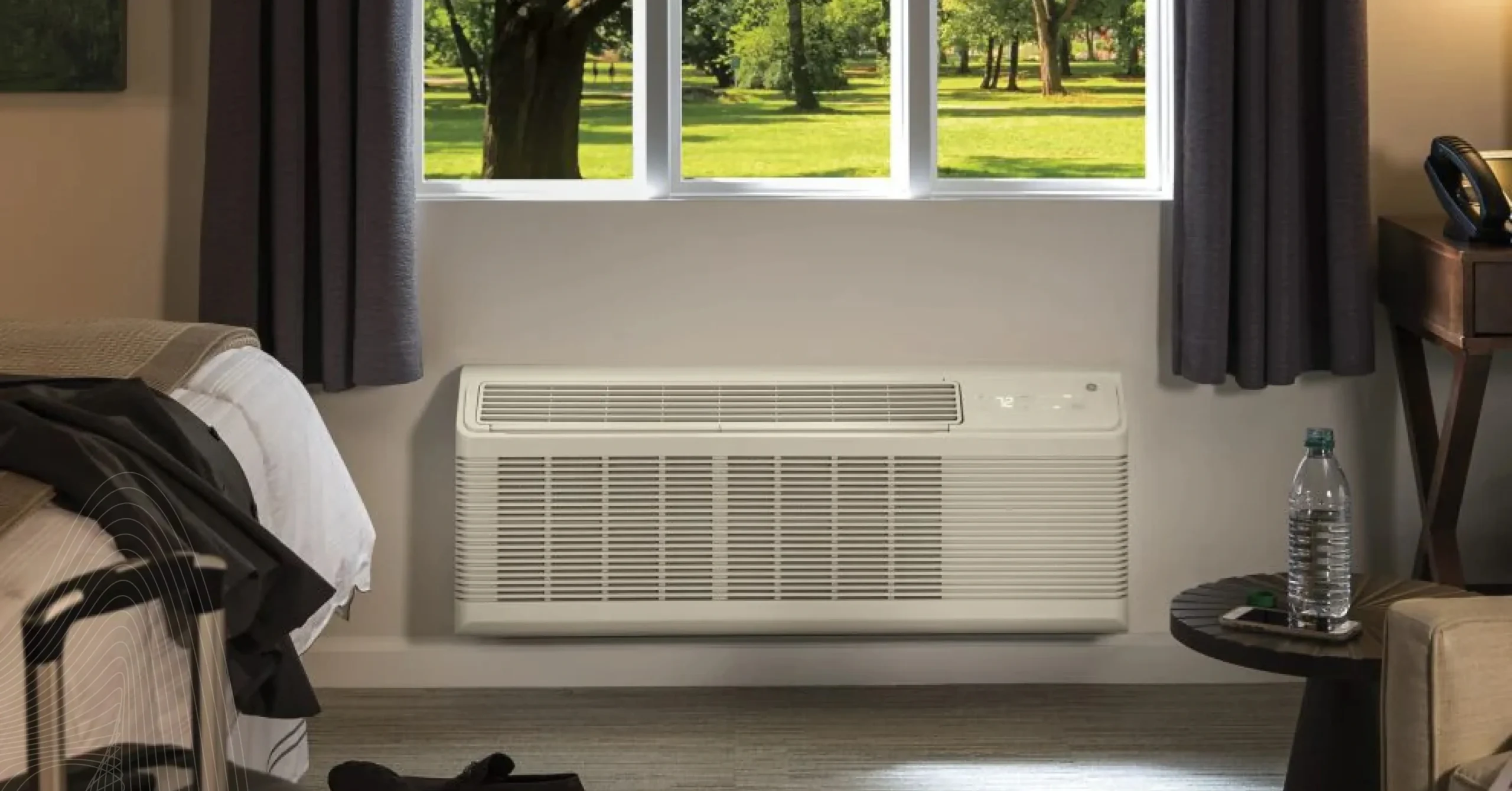
If you manage a hotel or motel, you already know that guest comfort lives and dies by one thing: room temperature. Too hot, and your reviews tank. Too cold, and no one sleeps. That’s why getting the right hotel PTAC units in place is one of the smartest investments you can make before peak season hits.
Being a smart investment doesn’t mean it needs to cost you an arm and a leg. Budget hotel PTAC units typically run $400 to $900 per unit before installation, depending on brand, BTU size, and whether you choose electric heat or a heat pump. As of 2026, there are more genuinely reliable options in that range than ever before — whether you’re outfitting 10 rooms or 200.
In this guide, we’ll cover what to look for when buying, which brands are worth your investment, and how to land on the right choice for your property — with real pricing, not just specs.
What Is a PTAC Unit, and Why Do Hotels Rely on Them?
If you’re new to the hospitality side of HVAC, here’s the quick version: a PTAC unit (Packaged Terminal Air Conditioner) is a self-contained heating and cooling system installed directly through an exterior wall, typically below a window. You’ve seen them in nearly every mid-range hotel room in America — that long, rectangular box that quietly hums while guests sleep.
What makes them ideal for hotels?
- Each unit operates independently, so one malfunction doesn’t take out the whole floor
- Guests can control their own comfort without calling the front desk
- Installation is straightforward, with no ductwork required
- Replacement is fast and cost-effective when something goes wrong
- Most units operate reliably across a wide temperature range — commonly rated from roughly 20°F to 115°F, covering nearly every US climate
For hotel and motel owners handling bulk procurement, commercial PTAC units also offer long-term value through energy savings and reduced service calls — provided you pick the right model from the start.
Quick Read – Direct Factory vs Distributor Model in Hotel Procurement 2026
PTAC Air Conditioner with Heat Pump vs. Electric Resistance: Which Makes More Sense?
This is a decision a lot of property managers overlook until they see their energy bill.
Instead of generating heat from scratch, a heat pump PTAC uses refrigerant to move heat instead. If you’re located in a region where winter temperatures rarely drop below 32°F, you’ll save an estimated 30% to 50% on heating costs by choosing a heat pump compressor over ordinary electric resistance heating.
Heat pump PTACs also tend to feel more consistent to guests, with less of the harsh “electric heat” sensation some guests find drying or uncomfortable.
That said, if you’re in a northern climate where temperatures routinely drop below 20°F, electric resistance backup or a dedicated heat strip may be the more reliable choice. The smart move is to match the system to your geography, not just your budget.
Top Brands Worth Looking at in 2026
Here’s how the leading brands stack up on price, use case, and standout features:
| Brand | Market Price Range* | Get Pricing | Best For | Standout Feature |
|---|---|---|---|---|
| Hotpoint | $400 – $650 | Request Quote → | Roadside motels, high-volume bulk orders | Low failure rate, easy servicing |
| Distinctions | $450 – $700 | Request Quote → | Full room renovations, modern aesthetic | Cleaner design profile than legacy PTACs |
| Amana | $550 – $950 | Request Quote → | Energy-conscious properties, quiet operation | Maintenance-friendly, wide BTU range (7,000–15,000) |
| GE Zoneline | $650 – $1,400 | Request Quote → | Extended-stay, multi-night guests | Fresh air ventilation, corrosion-resistant coastal models |
*Ranges reflect typical market pricing per unit and vary by BTU size, amp configuration, and order volume. Contact us for exact bulk pricing on any model.
Amana PTAC Units
Amana has built a strong reputation in the hotel HVAC space, and for good reason. Amana PTAC units are known for quiet operation, solid build quality, and a wide range of BTU outputs — from 7,000 BTU configurations up to 15,000 BTU for larger suites. Amana’s heat pump models are frequently chosen by properties prioritizing energy savings without sacrificing guest comfort.
Amana units also tend to be maintenance-friendly. Parts are widely available, and the controls are intuitive enough that housekeeping staff won’t need a manual every time they troubleshoot a complaint.
GE Zoneline PTAC Units
When it comes to durability and name recognition, GE Zoneline PTAC units are hard to beat. These systems have a long track record in extended-stay hotels and mid-scale properties, and GE has continued improving efficiency ratings over the years.
GE Zoneline units offer features like built-in electric heat backup, variable-speed fans, and fresh air ventilation on select models — a detail guests increasingly notice post-pandemic. Some GE Zoneline models also include corrosion-resistant coils, which matter significantly for coastal properties in Florida, the Gulf Coast, or anywhere with salt air exposure. If you’re running a property where guests stay multiple nights, Zoneline’s build quality tends to justify the price point.
Hotpoint PTAC Units
Hotpoint PTAC units occupy a solid budget tier — reliable enough for day-to-day hotel use without the premium price tag of some competitors. If you’re managing a roadside motel or a budget property where cost-per-room is the priority, Hotpoint delivers dependable heating and cooling at a price that makes bulk orders easier to justify.
Hotpoint doesn’t always get the same attention as Amana or GE, but operators who’ve used them consistently report low failure rates and straightforward servicing. For high-volume procurement where you need 50+ units, that reliability track record matters more than brand recognition.
Distinctions PTAC Units
Distinctions PTAC units are a newer option gaining traction among independent hotel owners who want a step up from basic models without jumping to premium pricing. These units have a cleaner aesthetic profile than older PTAC designs — worth considering if your property is renovating guest rooms and the old boxy look doesn’t fit the new design anymore.
Distinctions units are available in both standard and heat pump configurations, making them a good middle-ground choice for properties doing a full-room refresh where appearance matters alongside performance.
Featured PTAC Units Available Now at United Hotel Supply
If you’re ready to move past research and get into specifics, here are current in-stock models across every brand above. All units are AHRI certified, Verdant EMS compatible, and ship from US warehouses in 3–5 business days.
- Amana PTAC 9000 BTU Electric Heat, 20 Amp, 230V, R32 Refrigerant
- Amana PTAC 12000 BTU Electric Heat, 15 Amp, 230V, R32 Refrigerant
- Amana PTAC 15000 BTU Electric Heat, 20 Amp, 230V, R32 Refrigerant
- GE® Zoneline® 7000 BTU Air Conditioner with Heat Pump, 20 Amp, 230V, R410A Refrigerant
- GE® Zoneline® PTAC 7000 BTU Electric Heat, 20 Amp, 230V, R410A Refrigerant, Corrosion Protection
All Ptac units above use R32 refrigerant, which carries a lower global warming potential than older R410A systems and aligns with where commercial HVAC is heading on environmental standards. For franchise properties doing PIP work, that’s worth noting ahead of your next brand inspection.
Key Features to Compare When Buying in Bulk
When placing a bulk order, don’t just compare price per unit. Here’s what actually determines long-term value:
BTU Rating: Match the unit to room size. Most standard hotel rooms (roughly 300-400 sq ft) work well with a 9,000-12,000 BTU unit. Suites or corner rooms may need more.
EER (Energy Efficiency Ratio): Higher EER means lower operating costs. For energy-efficient hotel PTAC units, look for an EER of 11 or higher. Over dozens of rooms running year-round, the difference adds up fast.
Voltage Requirements: Most hotel PTAC systems run on 208/230V. Confirm your building’s electrical configuration before ordering, because mismatched voltage is one of the most common and easily avoidable installation mistakes.
Chassis Compatibility: If you’re replacing existing units, check whether the new units fit your current wall sleeves. Using compatible replacement PTAC units for hotels means you avoid costly wall modifications on every room.
Noise Level (dB): Guest reviews mention HVAC noise more than most hotel managers expect. Units rated below 45 dB for sleep mode make a real difference in guest satisfaction scores.
Warranty Terms: For bulk commercial orders, extended warranties or service agreements are often negotiable. Factor this into your total cost of ownership calculation.
How to Think About Cost When Ordering at Scale
When you’re buying 20, 50, or 100+ units, every dollar per unit multiplies. A $30 difference between two comparable models isn’t $30 — it’s $3,000 on a 100-unit order.
That math works the other way too: spending a little more upfront on an energy-efficient PTAC or a model with a longer parts lifespan can save far more in operating costs and service calls over the next five to seven years.
For properties doing a phased renovation — replacing units floor by floor — it also pays to standardize on one brand and model line. When every room runs the same unit, your maintenance team gets faster at servicing them, parts inventory stays simple, and staff training is a one-time investment.
The best PTAC units for hotels in 2026 aren’t necessarily the most expensive ones. They’re the ones that fit your specific property, climate, guest profile, and long-term operating plan.
Why the Right Supplier Makes All the Difference
Even if you pick the perfect unit, working with the wrong supplier can derail the whole project. Delayed shipments during a renovation window, units arriving without the right accessories, or slow responses when something’s wrong are real problems that cost real money.
This is where working with a supplier who actually understands hotel and motel operations changes the equation. You need someone who stocks what you need, knows the product lines inside and out, and can handle bulk orders without making you chase down logistics on your own.
Quick Read – The Role of Furniture in Hotel Renovations: What to Replace, What to Keep
Buy Hotel PTAC Units Online With the Right Partner by Your Side
For hotel and motel owners looking to buy hotel PTAC units online without the hassle of working through a general contractor or big-box distributor, United Hotel Supply is built specifically for properties like yours.
United Hotel Supply carries the leading brands, including Amana PTAC units for hotels, GE Zoneline hotel PTAC units, Hotpoint, and Distinctions, with competitive pricing on bulk orders. Whether you need PTAC units for sale for a quick replacement job or you’re planning a full property upgrade across dozens of rooms, the team at United Hotel Supply can help you spec the right units, confirm compatibility with your existing sleeves, and get your order moving without unnecessary delays.
They work with independent operators, franchise properties, and large multi-location hotel groups, and they understand that your timeline and budget are real constraints, not suggestions.
Ready to get a quote on your next PTAC order?
Visit United Hotel Supply today and talk to a team that speaks to the hotel, because your guests deserve comfort, and your property deserves a supplier that delivers.
Looking for specific model recommendations, help comparing heat pump vs. electric resistance options, or guidance on phased replacement planning? United Hotel Supply’s team is available to walk you through the options that make the most sense for your property type and location.
Frequently Asked Questions
How much does a budget PTAC unit cost for a hotel?
Budget hotel PTAC units typically range from $400 to $900 per unit before installation, depending on brand, BTU capacity, and heating type. Hotpoint and Distinctions generally fall at the lower end of that range, while Amana and GE Zoneline sit in the mid-to-premium tier. Bulk orders of 20+ units often qualify for additional pricing.
What size PTAC unit do I need for a standard hotel room?
Most standard hotel rooms (300–400 sq ft) work well with a 9,000 to 12,000 BTU PTAC unit. Larger suites or corner rooms with more window exposure may need up to 15,000 BTU. Send us your room dimensions and we’ll confirm the right size before you order.
